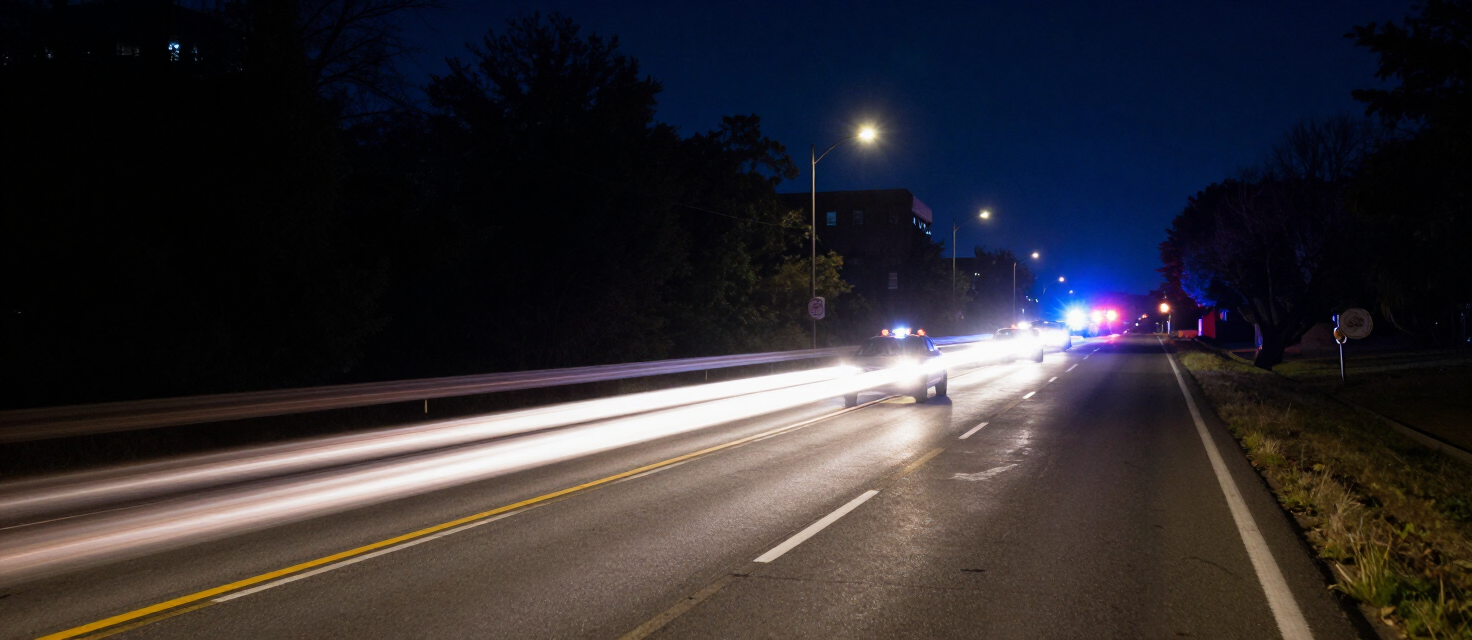
Lane tracking failure
Impairment affects a driver’s ability to hold a lane, producing drift and crossover crashes.
Car Accidents · Impaired Driving
A crash involving an impaired driver raises two different legal matters. The state may prosecute criminally, and the injured person may pursue a separate civil claim — one does not require the other.
The short answer
A crash involving an impaired driver raises two different legal matters. The state may prosecute the driver criminally, and the injured person may pursue a separate civil claim for compensation. They have different standards, evidence and outcomes — a civil claim does not require a criminal conviction. This page explains the civil issues generally and uses careful, professional language; it is not legal advice about any particular crash.
Common circumstances
These are general effects of impairment, not conclusions about any specific driver.
Impairment affects a driver’s ability to hold a lane, producing drift and crossover crashes.
Slower perception and response extends braking distance and worsens impact severity.
Impaired judgment contributes to risky maneuvers, excessive speed and failure to yield.
Impaired-driving crashes frequently occur late at night when traffic is lighter but visibility is worse.
Combined alcohol and other substances can compound impairment beyond any single factor.
Field observations, chemical testing and any admissions may bear on the civil claim.
Evidence
Relevant evidence depends on the facts. These categories frequently bear on liability and injury value in impaired-driving cases.
Evidence That May Matter
Officer observations, field-sobriety findings, citations and arrest records.
Blood, breath or urine test results, where available through the criminal process.
Accounts of erratic driving, admissions or observations at the scene.
Speed, braking and steering consistent with impaired operation.
Footage showing driving behavior or interactions at the scene.
Documentation connecting injuries and the crash dynamics to the collision.
Which evidence is relevant depends on the facts of the particular collision. This is general information, not legal advice or an investigation of any specific crash.
“A criminal prosecution and a civil injury claim are different legal matters. The injured person’s claim does not wait on, or depend on, a conviction.”
Potential injuries
Categories of injury, not diagnoses or predictions. Impaired crashes often involve excessive speed or no braking, increasing severity.
High-force impacts from excessive speed or failure to brake.
Disc and fracture injuries from severe collision forces.
Fractures and joint damage, often severe in high-speed impacts.
Organ damage and internal bleeding requiring emergency care.
Impaired-driving crashes carry a heightened risk of fatal outcomes.
Insurance issues
The criminal and civil matters proceed separately. The civil claim develops its own evidence and value.
Potential damages
Recoverable damages depend on the facts and applicable law. Nothing here promises that any particular damages will be recovered.
Emergency, surgical, ICU, imaging and therapy costs already incurred.
Ongoing care a provider anticipates will be required.
Wages and earnings lost during recovery.
Long-term impact on the ability to earn.
Repair or replacement of the vehicle.
The physical and emotional experience of the injury.
Lasting limitations on movement, cognition or function.
Additional categories recognized under applicable Missouri law.
What to do afterward
General guidance, not individualized legal advice.
Report the crash and any signs of impairment you observed.
Record odor, speech, balance or admissions while fresh — do not confront the driver.
Provide your account so the official report reflects what you observed.
Vehicle positions, damage, road conditions and any containers in the other vehicle.
Others may have observed the erratic driving before the crash.
High-speed impaired crashes can cause injuries not immediately obvious.
Kansas City context
Impaired-driving crashes occur across the Kansas City metro and frequently at night, on interstates and on Jackson County commuter corridors. The recurring factor is that impairment compounds the consequences of any traffic setting. No roadway is characterized here as having more impaired driving without supporting data.
Kansas City area resources
Frequently asked questions
General information only, not legal advice for any particular situation.
Keep exploring
Free case review
This is the intake experience a Kansas City injury firm would offer: clear fields, plain language and no pressure. On this demonstration site the form is entirely inert — nothing you type leaves your browser.
Demonstration only. No information is transmitted to an attorney or law firm.
Demonstration form only. Information entered here is not transmitted to a law firm or attorney.