Wrong-way vehicles
A driver entering a divided highway the wrong direction creates high-closing-speed, head-on conflict.
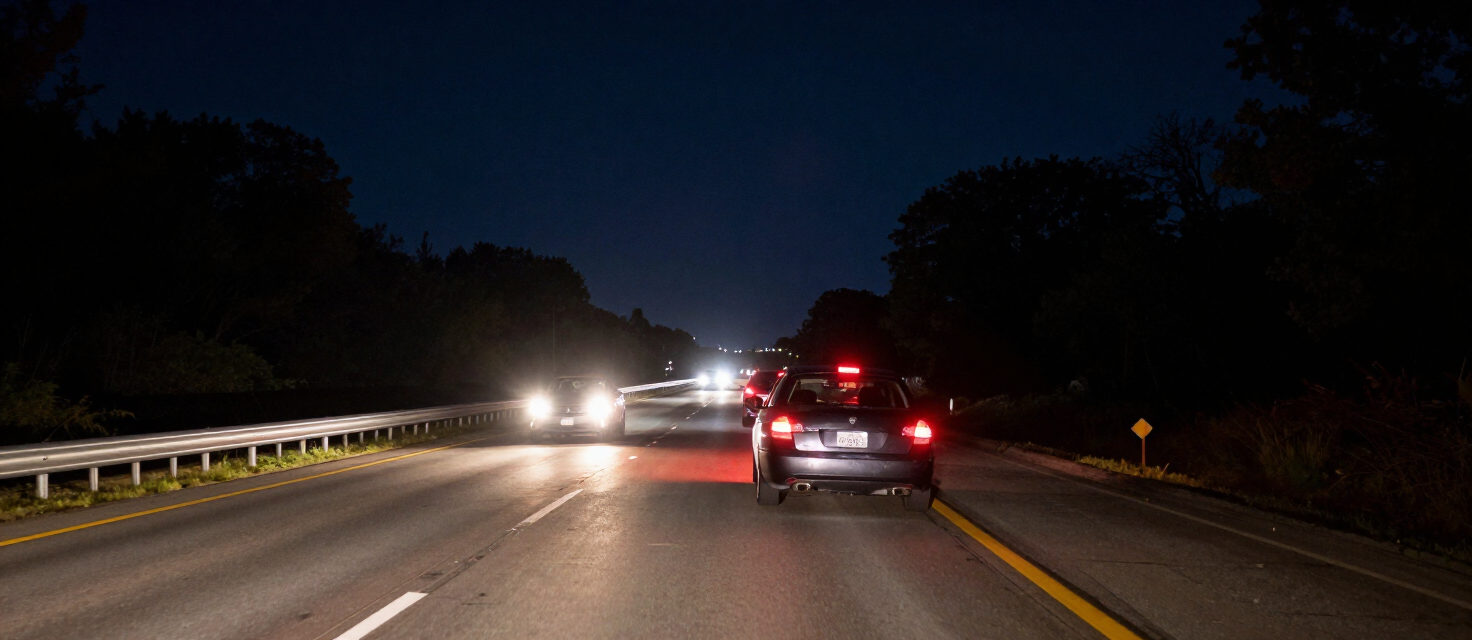
Car Accidents · Head-On Collisions
Head-on collisions are relatively rare but among the most severe crashes on Kansas City roads. The closing speed concentrates enormous force into the frontal structures, which is why these crashes so often produce catastrophic or fatal injuries.
The short answer
Head-on collisions are relatively rare but among the most severe crashes on Kansas City roads. The closing speed of two vehicles concentrates enormous force into the frontal structures, which is why these crashes so often produce catastrophic or fatal injuries. Fault usually turns on which vehicle crossed the center line or entered the wrong way — a question reconstruction and physical evidence help answer. This page explains the issues generally; it is not legal advice about any particular crash.
Common circumstances
These are recurring patterns, not conclusions about any specific driver.
A driver entering a divided highway the wrong direction creates high-closing-speed, head-on conflict.
A vehicle drifting across the center line — from distraction, fatigue or impairment — can produce a head-on impact.
Ice, rain, tire failure or overcorrection can send a vehicle into oncoming traffic.
Eyes off the road for seconds on a two-lane road can result in a drift across the center line.
Alcohol and other impairment affect lane tracking, judgment and reaction time.
Misjudged passing maneuvers on rural two-lane highways can result in direct head-on collisions.
Evidence
Relevant evidence depends on the facts. These categories frequently bear on liability and injury severity in head-on crashes.
Evidence That May Matter
Skid, scuff and yaw marks help reconstruct path and speed before impact.
The pattern and depth of frontal damage reflect closing speed and angle.
Speed, braking and steering input in the seconds before impact.
Accounts of a vehicle crossing the center line or traveling the wrong direction.
Officer findings, citations and road-condition observations.
Expert analysis of speed, path and the sequence that led to the collision.
Which evidence is relevant depends on the facts of the particular collision. This is general information, not legal advice or an investigation of any specific crash.
“In a head-on crash the vehicles often come to rest far from the point of impact. The marks on the road and the damage to the vehicles are what tell the real story.”
Potential injuries
Categories of injury, not diagnoses or predictions. Prompt and thorough medical evaluation is especially important in high-force crashes.
High-force frontal impact producing concussion or more severe brain trauma.
Fracture and disc injury from extreme forces.
Steering-wheel, airbag and seatbelt forces on the chest.
Dashboard and floor-pan intrusion causing leg, knee and foot fractures.
Organ damage and internal bleeding that can be life-threatening.
Insurance issues
Adjusters investigate liability and value. In high-force crashes, coverage layers often become central.
Potential damages
Recoverable damages depend on the facts and applicable law. Nothing here promises that any particular damages will be recovered.
Emergency, surgical, ICU, imaging and therapy costs already incurred.
Ongoing care and treatment a provider anticipates will be required.
Wages and earnings lost during recovery.
Long-term impact on the ability to earn.
Repair or replacement of the vehicle.
The physical and emotional experience of the injury.
Lasting limitations on movement, cognition or function.
Additional categories recognized under applicable Missouri law.
What to do afterward
General guidance, not individualized legal advice.
Head-on crashes frequently involve serious injury; request emergency response.
Unless a greater danger exists, wait for emergency medical personnel.
Photograph vehicle positions, damage, tire marks and road conditions.
Other drivers may have observed the wrong-way or crossing vehicle.
High-force impacts can produce injuries not immediately obvious.
Medical bills, transport records, repair estimates and wage-loss documentation.
Kansas City context
Kansas City’s outer two-lane roads and rural corridors in Platte and Clay counties carry higher-speed, two-way traffic where center-line crossings and passing maneuvers can produce head-on collisions. Divided interstates see occasional wrong-way entries. No roadway is characterized here as dangerous without supporting data; the recurring factor is that high closing speeds amplify the consequences of any lane departure.
Kansas City area resources
Frequently asked questions
General information only, not legal advice for any particular situation.
Keep exploring
Free case review
This is the intake experience a Kansas City injury firm would offer: clear fields, plain language and no pressure. On this demonstration site the form is entirely inert — nothing you type leaves your browser.
Demonstration only. No information is transmitted to an attorney or law firm.
Demonstration form only. Information entered here is not transmitted to a law firm or attorney.