High speeds
Interstate speeds concentrate more destructive energy into every collision, worsening both damage and injury.
Car Accidents · Highway Collisions
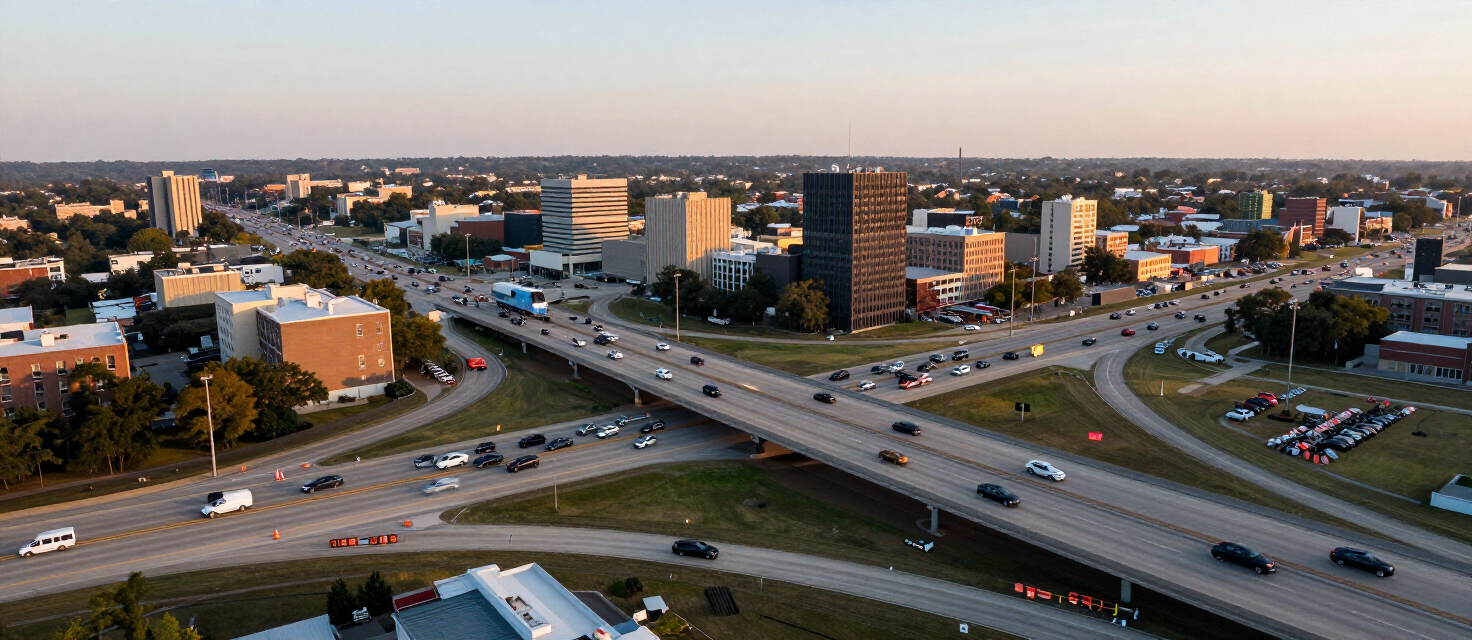
Kansas City traffic moves on I-35, I-70, I-435, I-49 and US-71. At interstate speeds, the same error that causes a minor city-street collision can cause catastrophic injuries.
The short answer
Kansas City traffic moves on interstates like I-35, I-70, I-435 and I-49, and the US-71 corridor. At interstate speeds, the same error that causes a minor collision on a city street can cause catastrophic injuries. Merging, lane changes, congestion, commercial trucks and construction zones all shape how highway crashes happen. This page explains the issues generally; it is not legal advice about any particular crash, and no accident statistics are cited.
Common circumstances
These are recurring patterns on Kansas City interstates, not conclusions about any specific driver or any specific road’s safety.
Interstate speeds concentrate more destructive energy into every collision, worsening both damage and injury.
On-ramp merges and lane changes on I-435 and I-70 create conflict points where right-of-way is disputed.
Traffic moving at very different speeds — some stopped, some at full speed — produces severe rear-end and multi-vehicle crashes.
Trucks sharing passenger-car lanes amplify the consequences of any error, given their size and stopping distance.
Lane shifts, reduced shoulders and worker presence change traffic patterns and raise the stakes of any collision.
Rain, ice and glare reduce traction and sight distance on high-speed corridors.
Evidence
Relevant evidence depends on the facts. These categories frequently bear on liability and injury severity in highway crashes.
Evidence That May Matter
Vehicle positions, damage, skid marks and road conditions on the interstate.
Officer findings, citations and the reported location and sequence.
Accounts from other drivers who saw the merging or lane-change sequence.
Speed, braking and steering from each vehicle at interstate speeds.
Forward or rear footage showing the moments before and during the crash.
Expert analysis of high-speed dynamics, sightlines and fault.
Which evidence is relevant depends on the facts of the particular collision. This is general information, not legal advice or an investigation of any specific crash.
Kansas City context
Kansas City sits at the crossing of I-35 and I-70, ringed by the I-435 loop, with I-49 and the US-71 corridor serving the south metro. Clay County connects to the north via I-35 and I-435; Jackson County carries the heaviest east-west commuter traffic. These corridors move high-speed, dense traffic where merging, lane changes and congestion produce characteristic crash patterns. No roadway is characterized here as dangerous without supporting data.
Kansas City area resources
Potential injuries
Categories of injury, not diagnoses or predictions. High-speed crashes carry a heightened risk of serious and fatal injury.
High-speed impacts producing severe brain trauma.
Disc and fracture injuries from extreme forces.
Complex fractures and joint damage common at interstate speeds.
Organ damage and internal bleeding requiring emergency care.
High-speed highway crashes carry a heightened risk of fatal outcomes.
Insurance issues
Adjusters investigate liability and value. Coverage layers and construction-zone deadlines often become central.
Potential damages
Recoverable damages depend on the facts and applicable law. Nothing here promises that any particular damages will be recovered.
Emergency, surgical, ICU, imaging and therapy costs already incurred.
Ongoing care a provider anticipates will be required.
Wages and earnings lost during recovery.
Long-term impact on the ability to earn.
Repair or replacement of the vehicle.
The physical and emotional experience of the injury.
Lasting limitations on movement, cognition or function.
Additional categories recognized under applicable Missouri law.
What to do afterward
General guidance, not individualized legal advice. Secondary crashes are a real danger on interstates.
Highway shoulders are dangerous; if vehicles can be moved safely, clear the travel lanes.
Report the location, injuries and any lane blockage; request emergency response.
Alert approaching traffic to reduce the risk of a secondary crash.
Capture vehicle positions, damage and road conditions without entering live traffic.
Other drivers who saw the sequence may leave the scene quickly.
High-speed impacts can cause injuries not immediately obvious.
Frequently asked questions
General information only, not legal advice for any particular situation.
Keep exploring
Free case review
This is the intake experience a Kansas City injury firm would offer: clear fields, plain language and no pressure. On this demonstration site the form is entirely inert — nothing you type leaves your browser.
Demonstration only. No information is transmitted to an attorney or law firm.
Demonstration form only. Information entered here is not transmitted to a law firm or attorney.