Stop-and-go congestion
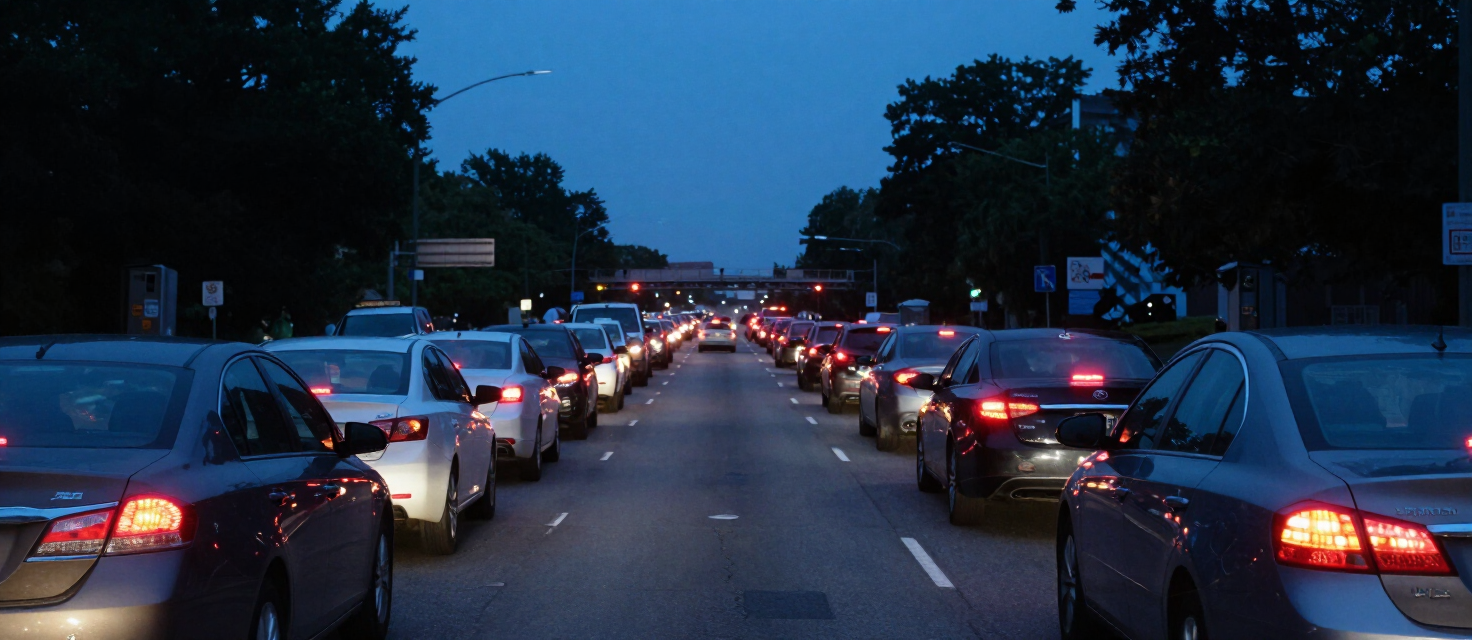
Kansas City interstates stack with brake lights during rush hours. A trailing driver who glances away for two seconds may not see traffic stop ahead.
Car Accidents · Rear-End Collisions
Rear-end collisions are among the most common crashes on Kansas City interstates and at congested intersections. The assumption that the trailing driver is always responsible is widespread — and not always accurate.
The short answer
Rear-end collisions are among the most frequent crashes on Kansas City interstates and at congested intersections. The assumption that the trailing driver is always responsible is widespread — and not always accurate. Following distance, traffic conditions, brake-light function, sudden stops and chain-reaction sequence all bear on how responsibility is evaluated. This page explains the issues generally; it is not legal advice about any particular crash.
Common circumstances
Most rear-end crashes involve a combination of following distance, attention and traffic conditions. The circumstances below describe recurring patterns, not conclusions about any specific driver.
Kansas City interstates stack with brake lights during rush hours. A trailing driver who glances away for two seconds may not see traffic stop ahead.
A line of cars braking for a exit, a turn lane or a sudden hazard leaves the trailing driver little room to react.
Tailgating compresses the time available to stop. The faster the traffic, the more following distance the physics of braking require.
Phones, infotainment systems and reaching for objects divert eyes and attention at exactly the moment traffic changes.
One rear-end impact can push a stopped vehicle into the car ahead of it, creating a sequence that raises difficult questions about each driver’s role.
The location and depth of bumper, trunk and frame damage can help reconstruct speed, angle and the sequence of impacts.
Evidence
Relevant evidence depends on the facts. These are categories that frequently bear on liability and injury value in rear-end collisions.
Evidence That May Matter
Vehicle positions, damage, skid marks, road conditions and traffic controls captured close to the loss.
The official narrative, citations, diagrams and identifying information for everyone involved.
Accounts of following distance, braking and the sequence of impacts gathered while memory is fresh.
Speed, throttle and braking in the seconds before impact, captured by the vehicle’s own systems.
Forward or rear-facing footage that may show the moments before and during the collision.
Emergency, imaging and therapy documentation connecting injuries to the crash.
Which evidence is relevant depends on the facts of the particular collision. This is general information, not legal advice or an investigation of any specific crash.
“Following distance is not a courtesy — it is the distance the laws of physics require to stop. The evidence of whether it was kept is usually in the vehicles and the road.”
Potential injuries
These are categories of injury, not diagnoses or predictions. Some serious injuries are not immediately apparent, which is why prompt medical care matters for both health and documentation.
Soft-tissue neck injury common in rear impacts, real but sometimes slow to document.
Disc injury in the neck or back that may require imaging and longer-term care.
Brain injury from the head striking the interior or from sudden acceleration and deceleration.
Impact with the steering wheel, airbag or dashboard.
Bracing and steering-grip forces transmitted through the arms.
Insurance issues
Adjusters represent the insurer, not the injured person. Understanding that process helps injured people engage on equal footing.
Potential damages
Recoverable damages depend on the facts and applicable law. Nothing here promises that any particular damages will be recovered, and no settlement calculator is offered.
Emergency, imaging, therapy and prescription costs already incurred.
Treatment a provider anticipates will be required.
Wages lost during recovery and treatment appointments.
Long-term impact on the ability to earn at the same level.
Repair or replacement of the vehicle and damaged belongings.
The physical and emotional experience of the injury and recovery.
Lasting limitations on movement or function.
Additional categories recognized under applicable Missouri law.
What to do afterward
General guidance, not individualized legal advice.
If the vehicles can be moved and no one is seriously hurt, clear the travel lanes and turn on hazard lights.
Report injuries, blocked lanes or any driver who leaves the scene.
Damage, positions, skid marks, brake lights and road conditions.
Names and numbers while people are still present.
Some injuries are not obvious immediately; prompt care creates the record.
Medical bills, repair estimates, tow receipts and wage-loss documentation.
Kansas City context
Kansas City traffic concentrates on interstates like I-35, I-70 and I-435, where stop-and-go congestion during commuter peaks creates the conditions for rear-end collisions. Suburban intersections along commuter corridors in Independence and Lee’s Summit produce similar patterns at lower speeds. No roadway is characterized here as dangerous without supporting data; the point is that congestion and following distance are recurring factors across the metro.
Kansas City area resources
Frequently asked questions
General information only, not legal advice for any particular situation.
Keep exploring
Free case review
This is the intake experience a Kansas City injury firm would offer: clear fields, plain language and no pressure. On this demonstration site the form is entirely inert — nothing you type leaves your browser.
Demonstration only. No information is transmitted to an attorney or law firm.
Demonstration form only. Information entered here is not transmitted to a law firm or attorney.