Delivery trucks
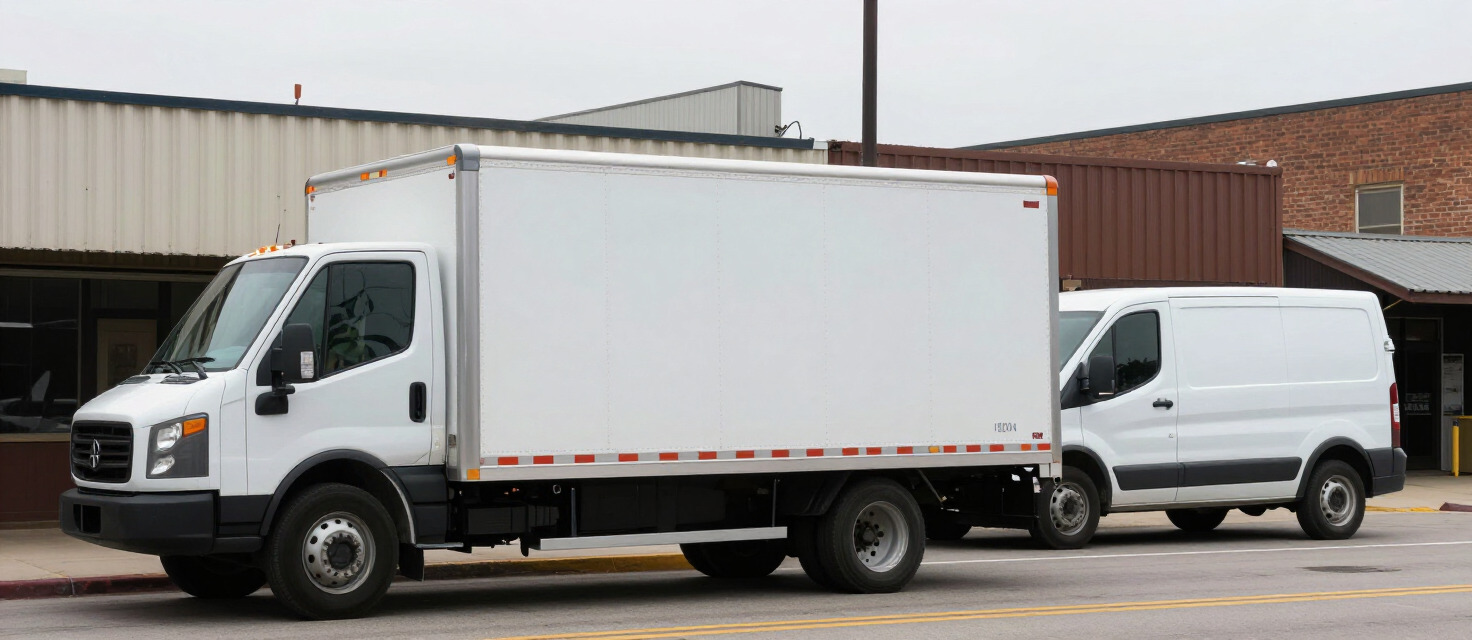
Last-mile delivery vehicles making frequent stops in residential and commercial areas, often under time pressure.
Practice Area · Beyond Tractor-Trailers
Not every commercial vehicle on a Kansas City road is an eighteen-wheeler. Delivery trucks, work vans, utility vehicles, construction equipment and company cars are everywhere — and when one is involved in a crash, the questions reach beyond the driver to the employer, the fleet and the coverage behind it.
The short answer
The collision itself may look like any other, but the surrounding questions differ. Vehicle ownership, the employment relationship, commercial and fleet insurance, company policies, telematics and maintenance records can all become relevant — and identifying the responsible parties and applicable coverage can be more complex than in an ordinary car claim.
Types of commercial vehicles
Last-mile delivery vehicles making frequent stops in residential and commercial areas, often under time pressure.
Contractor and service vans carrying tools and crews through city traffic and neighborhoods.
Telecom, cable and utility fleet vehicles working along roadways and in work zones.
Dump trucks, cement mixers and heavy equipment moving between sites and roadways.
Medium-duty straight trucks used for regional freight and local distribution.
Plumbers, HVAC and technician vehicles dispatched to job sites across the metro.
Privately registered vehicles used for business, raising questions about the employment relationship.
Managed fleets with telematics, driver policies and corporate oversight that may bear on responsibility.
Questions that arise
A commercial vehicle crash can raise questions about the driver, the employer, the vehicle owner, a maintenance vendor and the applicable insurance. Whether any party is legally responsible depends on the facts — it should not be assumed that an employer is responsible in every situation.
Was the driver speeding, distracted, fatigued or otherwise careless? The same fault questions as any collision apply.
Was the driver acting within the scope of employment? An employer may be responsible in some circumstances, but not in every situation.
Who owned the vehicle — the driver, an employer, a leasing company or a fleet operator? Ownership affects who may be a defendant.
Was the vehicle properly inspected and serviced? Maintenance records can reveal contributing mechanical issues.
Which policies apply — personal, commercial, fleet or a combination? Identifying every layer is an early step.
Did hiring, training, scheduling or dispatch practices contribute? Internal records may be relevant.
Telematics, dash video, dispatch records, maintenance logs and driver files may exist and should be identified early.
“A commercial vehicle brings a company, a fleet and a coverage stack into the case — the work is identifying which of them answers for the harm.”
Evidence
Beyond the usual scene and medical evidence, commercial cases may involve telematics, dash video, dispatch records, maintenance logs and driver qualification files — much of it held by the company and subject to being overwritten or destroyed. Early identification and preservation matters.
Insurance & damages
Personal, commercial and fleet policies may all apply. Recoverable damages depend on the facts and applicable law; potential categories may include medical expenses, future medical needs, lost income, reduced earning capacity, property damage, pain and suffering and permanent impairment. Nothing here promises recovery.
Frequently asked questions
General information only, not legal advice for any particular situation.
Keep exploring
Tractor-trailer collisions involving carrier records and federal regulations.
The underlying collision mechanics behind many commercial-vehicle crashes.
Life-care planning and long-horizon damages analysis.
The stages a serious claim may move through, start to finish.
Free case review
This is the intake experience a Kansas City injury firm would offer: clear fields, plain language and no pressure. On this demonstration site the form is entirely inert — nothing you type leaves your browser.
Demonstration only. No information is transmitted to an attorney or law firm.
Demonstration form only. Information entered here is not transmitted to a law firm or attorney.