DEMONSTRATION WEBSITE — Demo, Stration & Sample is a fictional law firm created to demonstrate professional legal website design. No legal services are offered through this website.
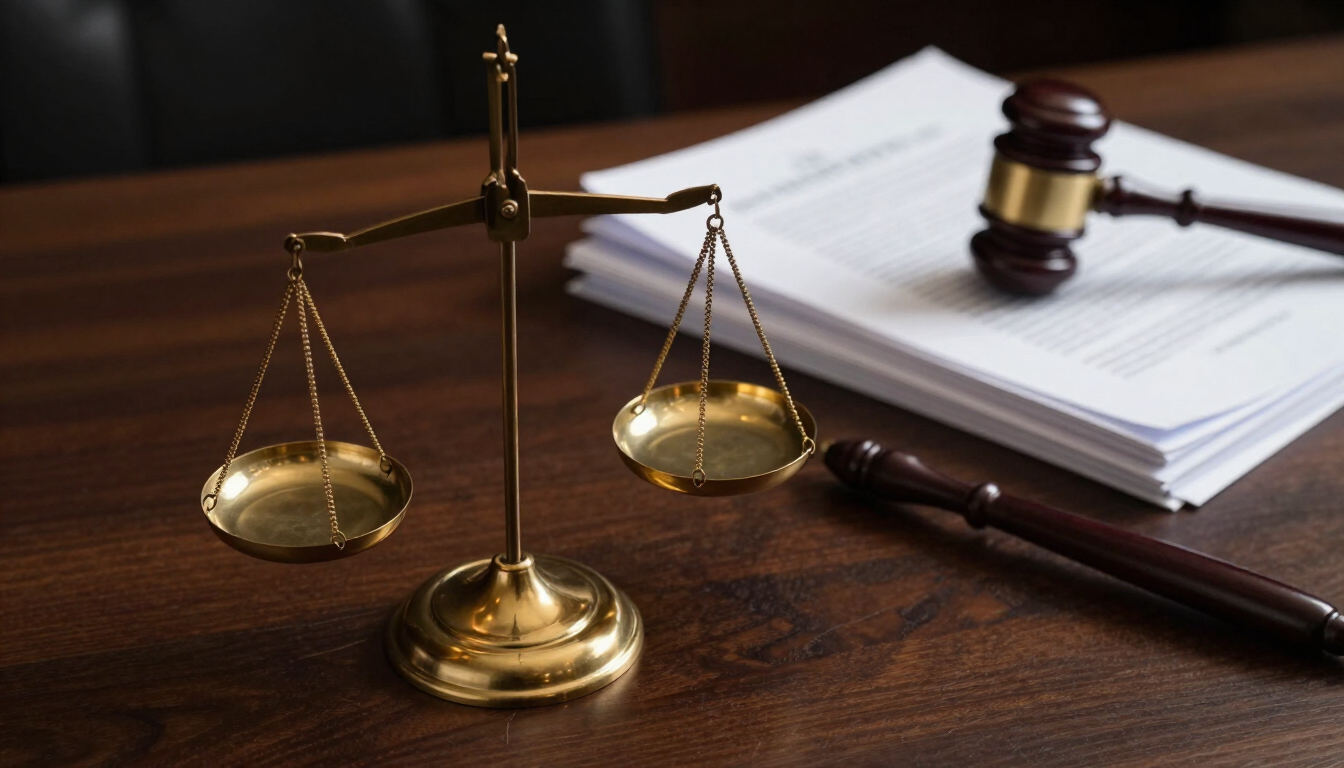
Brass balance scale of justice representing the allocation of fault

Answer Center · Fault & Liability

Fault & Liability Questions & Answers

Fault and liability are the foundation of any injury claim. These answers cover how fault is determined, what happens when you share responsibility, comparative fault, multiple responsible parties, employer and vehicle-owner liability, defective equipment, poor maintenance, and the evidence that establishes negligence. General information, not legal advice.

9 questions

01

How is fault determined after an accident?

Direct answer

Fault is determined from the available evidence — the police report, witness statements, physical damage, vehicle data, traffic-control timing, and sometimes reconstruction analysis. Each driver’s duties — right-of-way, following distance, signal use, speed — are evaluated against what happened. Fault is not assumed; it is established from the facts.

More detail

In a negotiated claim the parties argue over the allocation; in a lawsuit a judge or jury assigns it. The framework is the same — only the decision-maker differs. Strong evidence developed early tends to drive the outcome, which is why preservation matters.

Related resource

Comparative Fault
02

What if I was partly responsible for the accident?

Direct answer

You may still have a claim. Missouri applies a pure comparative fault approach, meaning your recovery may be reduced by your assigned percentage of fault rather than barred entirely. A person 30% at fault may recover 70% of their damages. The practical effect depends on how fault is apportioned from the evidence.

More detail

Comparative fault recognizes that real accidents often have multiple contributing causes. The percentages come from the evidence and are argued in negotiation or assigned by a jury. Very high fault allocations can make a claim difficult to pursue because the recovered portion may not justify the cost, but the framework itself never closes the door.

Example

If a jury found you 25% at fault with $100,000 in damages, you would recover $75,000 under Missouri’s pure comparative approach.

Related resource

Comparative Fault
03

What is comparative fault?

Direct answer

Comparative fault is a framework that assigns each party a percentage of responsibility for an accident and reduces an injured person’s recovery by their assigned percentage. Missouri uses a pure comparative fault model, allowing recovery at any fault level with a proportional reduction. The terms comparative fault and comparative negligence are often used interchangeably.

More detail

Missouri’s pure model is more forgiving than modified systems (which bar recovery above 50% or 51% fault) and contributory negligence (which can bar recovery entirely with even slight fault). The same facts can yield very different outcomes depending on the rule that applies. For accidents in Missouri, the pure comparative model applies.

Example

Under Missouri’s pure comparative approach, an injured person 70% at fault may still recover 30% of their damages. Under a contributory negligence rule, the same person might recover nothing.

Related resource

Comparative Negligence
04

Can more than one person be responsible for an accident?

Direct answer

Yes. Real accidents often have multiple contributing causes, and fault can be apportioned among several parties under Missouri’s comparative fault approach. In a multi-vehicle crash, several drivers may each bear a percentage. Identifying all potentially responsible parties early matters for both liability and coverage.

More detail

Each at-fault party’s insurer evaluates its insured’s exposure, and an injured person may pursue claims against more than one party. The total recovery is shaped by how fault is divided and by each party’s available coverage. A thorough analysis identifies every party and every coverage layer.

Related resource

Comparative Fault
05

Can a company be responsible for an employee’s driving?

Direct answer

A company may be responsible for an employee’s driving in some circumstances, based on the employment relationship and whether the employee was acting within the scope of employment. It should not be assumed that an employer is responsible in every situation. The specific facts — ownership, job duties, and what the driver was doing — determine it.

More detail

Responsibility can flow from the employment relationship (vicarious responsibility) and from the company’s own practices — hiring, training, supervision, and maintenance. A commercial driver making a delivery presents a different analysis than a commuter running a personal errand. Vehicle ownership and the nature of the task are factual questions.

Related practice area

Commercial Vehicle Accidents
06

Can a vehicle owner ever be responsible for an accident?

Direct answer

In some circumstances, yes. A vehicle owner may bear responsibility depending on the facts and applicable Missouri law — for example, where they knowingly lent the vehicle to an unsafe driver, or where ownership and operation create responsibility under specific rules. Whether an owner is responsible is a fact-specific question.

More detail

Ownership alone does not automatically create responsibility, but certain relationships and circumstances can. The owner’s knowledge of the driver’s record, the purpose of the loan, and the applicable legal framework all factor in. Coverage questions often accompany owner-liability questions, since the owner’s policy may also apply.

Related practice area

Car Accidents
07

What if defective equipment contributed to the accident?

Direct answer

A defective component — brakes, tires, steering, or another part — may have contributed to a crash, and the manufacturer or another party in the supply chain may bear responsibility in some circumstances. Whether a defect was involved and who is responsible are factual questions examined through the vehicle, the records, and sometimes expert analysis.

More detail

A products claim arising from a defective component is distinct from a negligence claim against a driver. It may involve the manufacturer, a parts supplier, or a maintenance vendor. Expert analysis of the failed component and the vehicle’s maintenance history helps establish whether a defect contributed. The specific facts determine whether such a claim is viable.

Related practice area

Catastrophic Injuries
08

What if poor maintenance contributed to the accident?

Direct answer

Poorly maintained vehicles or equipment can contribute to a crash — worn brakes, bald tires, or faulty lighting. A party responsible for maintenance — the owner, a fleet operator, or a repair vendor — may bear responsibility depending on the facts. Maintenance and inspection records help establish what was known and when.

More detail

In commercial contexts, carriers are required to inspect and maintain their vehicles, and records can reveal deferred maintenance or recurring problems. For passenger vehicles, an owner who ignored known issues may share responsibility. Repair orders, inspection reports, and the condition of the failed part are central evidence.

Related practice area

Truck Maintenance
09

What evidence helps establish negligence?

Direct answer

The police report, witness statements, photographs of the scene and damage, vehicle event data recorder information, dashcam or nearby video, signal-timing records, and sometimes accident reconstruction. Negligence is shown by establishing that a party failed to exercise reasonable care and that the failure caused the harm. Evidence preserved early is the hardest to reconstruct later.

More detail

Negligence has elements — duty, breach, causation, and damages — each supported by evidence. The police report and witnesses address what happened; vehicle data and reconstruction address how; medical records address the harm. The strength of the evidence on each element largely determines whether negligence is established and to what degree.

Related resource

Evidence Preservation

More questions

Frequently asked, answered directly.

General information only, not legal advice for any particular situation.

Keep exploring

More questions & deeper resources.

Demonstration website only. No information is transmitted to an attorney or law firm. These answers are general educational information, not legal advice for any particular situation. Demo, Stration & Sample is a fictional law firm.

Free case review

Questions about fault? Request a free case review.

This is the intake experience a Kansas City injury firm would offer: clear fields, plain language and no pressure. On this demonstration site the form is entirely inert — nothing you type leaves your browser.

Demonstration only. No information is transmitted to an attorney or law firm.

Office
1100 Main St, Kansas City, MO 64105

Demonstration Case Review

Demonstration form only. Information entered here is not transmitted to a law firm or attorney.

Medical Treatment

No attorney-client relationship is created by submitting this demonstration form, and no information is sent to a lawyer.