DEMONSTRATION WEBSITE — Demo, Stration & Sample is a fictional law firm created to demonstrate professional legal website design. No legal services are offered through this website.
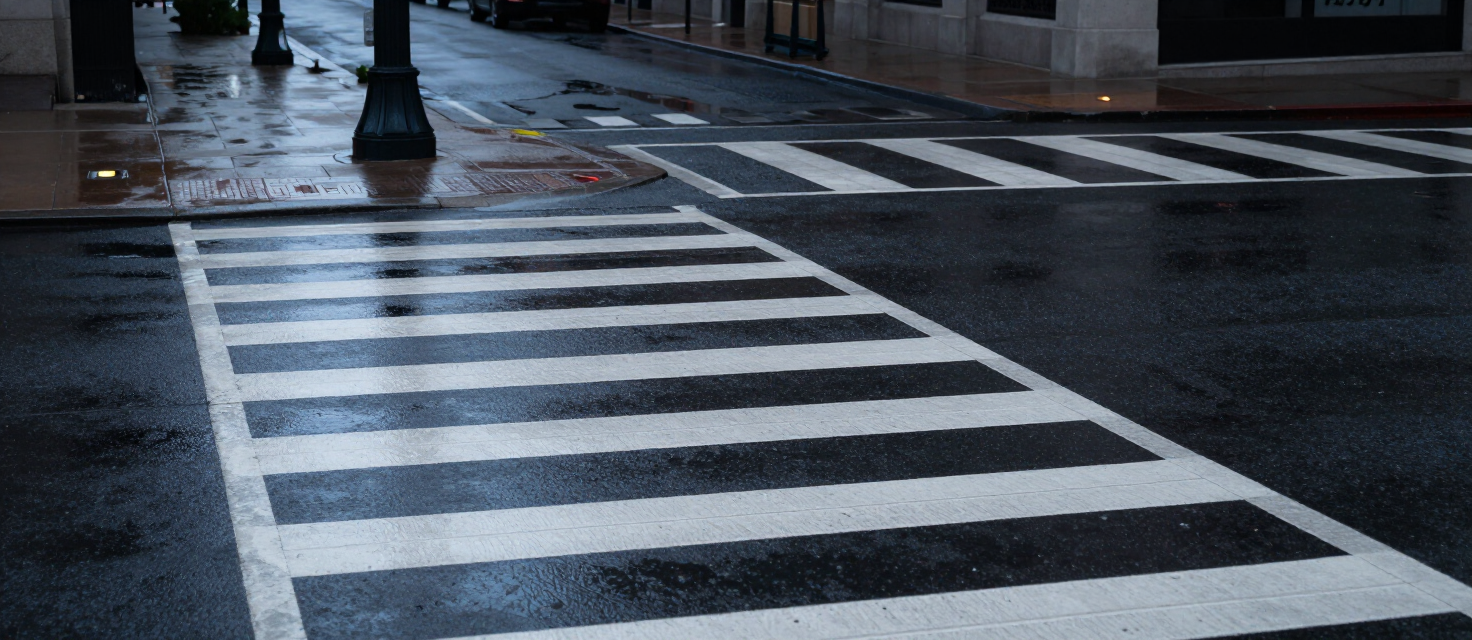
Downtown Kansas City pedestrian crosswalk at dusk with zebra stripes and walk signal, wet pavement reflections

Answer Center · Pedestrian & Bicycle

Pedestrian & Bicycle Accident Questions & Answers

People on foot and on bikes are vulnerable road users — no protection against a vehicle. These answers cover crosswalk and outside-crosswalk crashes, turning-vehicle and dooring collisions, evidence, hit-and-run, uninsured motorist coverage, and the limits of universal liability statements. General information, not legal advice.

8 questions

01

Who may be responsible for a pedestrian accident?

Direct answer

Responsibility depends on the evidence — right-of-way, signal phase, crosswalk status, visibility, and what each person could reasonably have seen. Drivers are generally required to yield to pedestrians in crosswalks, but the specific duties depend on Missouri law and the facts. Fault is not assumed; it is established from the evidence.

More detail

A person on foot has no protection against a vehicle, so pedestrian crashes frequently produce serious injuries. The questions that follow — right-of-way, visibility, driver attention — shape both liability and the work of proving it. Missouri’s comparative fault may also apportion responsibility to the pedestrian in some circumstances.

Related practice area

Pedestrian Accidents
02

What if a pedestrian was struck in a crosswalk?

Direct answer

Drivers are generally required to yield to pedestrians in crosswalks, but the specific duties depend on Missouri law and the facts — marked versus unmarked crosswalks, signal phases, and pedestrian conduct all matter. A crosswalk crash often centers on right-of-way and whether the driver could see the pedestrian. This page does not provide legal advice on right-of-way for a particular situation.

More detail

Marked and unmarked crosswalks can carry different duties. Signal phases matter: a pedestrian crossing with the signal has a stronger position than one crossing against it. Turning vehicles that fail to scan for people crossing the street they are turning onto are a frequent pattern. Witness statements, signal-timing records, and nearby video help establish what happened.

Related practice area

Pedestrian Accidents
03

What if a pedestrian was outside a crosswalk?

Direct answer

A pedestrian outside a crosswalk may still have a claim, but the right-of-way analysis differs. Drivers still owe a duty to exercise reasonable care, and a pedestrian’s location does not automatically bar recovery. Missouri’s comparative fault may reduce recovery by the pedestrian’s assigned percentage of fault rather than barring the claim. The facts decide it.

More detail

Being outside a crosswalk is a factor in how fault is apportioned, not an automatic defeat of the claim. A driver who had time to see and avoid the pedestrian may still bear responsibility. Visibility, speed, lighting, and the pedestrian’s conduct all factor into the analysis. The specific duties depend on Missouri law and the facts.

Related practice area

Pedestrian Accidents
04

What if a cyclist is hit by a turning vehicle?

Direct answer

Turning-vehicle collisions are a common bicycle pattern. Right-turning vehicles may fail to scan for cyclists on their right, and left-turning vehicles may cross an oncoming cyclist’s path. Fault turns on right-of-way, lane position, signal phase, and what each person could see. Cyclists have the right to use the roadway, and drivers are expected to share it safely.

More detail

A right-turning driver focused on traffic may not check their right side for a cyclist proceeding straight. A left-turning driver may misjudge an oncoming cyclist’s speed. Missouri’s comparative fault may apportion responsibility based on the evidence. Lane position, signal use, and sightlines are central, and witness statements plus scene photographs help establish them.

Related practice area

Bicycle Accidents
05

What evidence matters after a bicycle collision?

Direct answer

The police report, witness statements, photographs of the scene and roadway, the damaged bicycle and helmet, any available video, and the complete medical record. The bicycle, helmet, and clothing are physical evidence — photograph and preserve them before anything is repaired or discarded. Road-condition evidence can be especially important where pavement contributed.

More detail

Because riders are often thrown clear, vehicle positions and scene geometry matter and fade quickly. Nearby business or traffic camera video should be identified promptly, as it is often overwritten within days. A consistent medical record connects injuries to the crash. Together, these show what records alone cannot.

Related resource

Evidence Preservation
06

What happens after a pedestrian or cyclist hit-and-run?

Direct answer

Call the police so an official report is created, and preserve any evidence — photographs, witness contacts, and nearby video identified quickly. When the at-fault driver cannot be identified, uninsured motorist coverage on the injured person’s own policy, or on certain other policies, may apply. Prompt police involvement helps preserve evidence.

More detail

A hit-and-run can make identifying the at-fault driver difficult. Witnesses, traffic or business cameras, and vehicle descriptions may help identify the fleeing driver. Even if the driver is never found, uninsured motorist coverage may provide a path to recovery. Identifying every available coverage layer is an early step.

Related practice area

Uninsured & Underinsured Motorist
07

Can uninsured motorist coverage become relevant for a pedestrian or cyclist?

Direct answer

Yes, in some situations. When the at-fault driver is uninsured, underinsured, or cannot be identified after a hit-and-run, uninsured and underinsured motorist coverage on the injured person’s own auto policy, or on certain other policies, may apply even though the injured person was on foot or on a bike. Whether it applies depends on the policy and the facts.

More detail

Uninsured motorist coverage is not limited to occupants of a vehicle; it can extend to a pedestrian or cyclist struck by an uninsured or hit-and-run driver in some circumstances. The specific policy language and Missouri law determine availability. Identifying every applicable policy is an early step in evaluating the claim.

Related practice area

Uninsured & Underinsured Motorist
08

Is the driver always at fault when a pedestrian or cyclist is hit?

Direct answer

No. Liability depends on the evidence, not on who was on foot or on a bike. Drivers generally must yield to pedestrians in crosswalks and share the road safely with cyclists, but pedestrians and cyclists also have duties under Missouri law. Missouri’s comparative fault may apportion responsibility based on the facts. No universal liability statement applies.

More detail

A pedestrian crossing against a signal outside a crosswalk, or a cyclist ignoring right-of-way rules, may share responsibility. A driver who failed to yield or was distracted may bear primary responsibility. The evidence — right-of-way, visibility, conduct, and what each person could see — drives the analysis. Each situation is fact-specific.

Related resource

Comparative Fault

More questions

Frequently asked, answered directly.

General information only, not legal advice for any particular situation.

Keep exploring

More questions & deeper resources.

Demonstration website only. No information is transmitted to an attorney or law firm. These answers are general educational information, not legal advice for any particular situation. Demo, Stration & Sample is a fictional law firm.

Free case review

Questions about a pedestrian or bicycle accident? Request a free case review.

This is the intake experience a Kansas City injury firm would offer: clear fields, plain language and no pressure. On this demonstration site the form is entirely inert — nothing you type leaves your browser.

Demonstration only. No information is transmitted to an attorney or law firm.

Office
1100 Main St, Kansas City, MO 64105

Demonstration Case Review

Demonstration form only. Information entered here is not transmitted to a law firm or attorney.

Medical Treatment

No attorney-client relationship is created by submitting this demonstration form, and no information is sent to a lawyer.