Vehicle-bicycle collisions
A moving vehicle strikes a cyclist sharing the roadway. Right-of-way, lane position and what each person could see usually decide fault.
Local Resources · Bicycle Safety
Cyclists share the roadway with vehicles that outweigh them many times over, and when something goes wrong the rider takes the impact. This page covers how bicycle collisions happen in Kansas City, the evidence that matters, and the questions that follow — using real local infrastructure information only where verified.
The short answer
Direct answer: Bicycle crashes often involve turning vehicles, dooring, passing too closely, intersection conflicts and visibility problems. Cyclists have the right to use the roadway, and drivers are expected to share it safely. Fault depends on Missouri law and the evidence — right-of-way, lane position, passing distance and what each person could see. The bicycle and helmet are physical evidence and should be preserved. No local bicycle-accident statistics are invented here.
Related resources
How bicycle crashes happen
These are recurring collision patterns, not conclusions about any specific driver or location.
A moving vehicle strikes a cyclist sharing the roadway. Right-of-way, lane position and what each person could see usually decide fault.
Cyclists crossing or proceeding through an intersection are frequently struck by turning or crossing vehicles.
Right-turning vehicles that fail to scan for cyclists on their right, and left-turning vehicles that cross an oncoming cyclist’s path.
A parked vehicle’s door is opened into the cyclist’s path. Dooring is a recognized collision type with its own right-of-way questions.
A vehicle passing too closely clips or forces a cyclist off the road. Missouri law sets expectations for safe passing distance.
Lighting, clothing and lane position affect how visible a cyclist is to drivers, especially after dark.
Evidence
Relevant evidence depends on the facts. These categories frequently bear on liability in bicycle crashes. The bicycle and helmet are physical evidence — preserve them.
Officer findings, citations and the reported sequence.
Accounts from bystanders and other drivers.
The lane, road conditions, signs and sightlines.
Physical evidence — photograph and preserve before anything is repaired or discarded.
Nearby traffic, business or dashcam cameras that may have captured the collision.
Documentation of the injuries and treatment.
Infrastructure & conditions
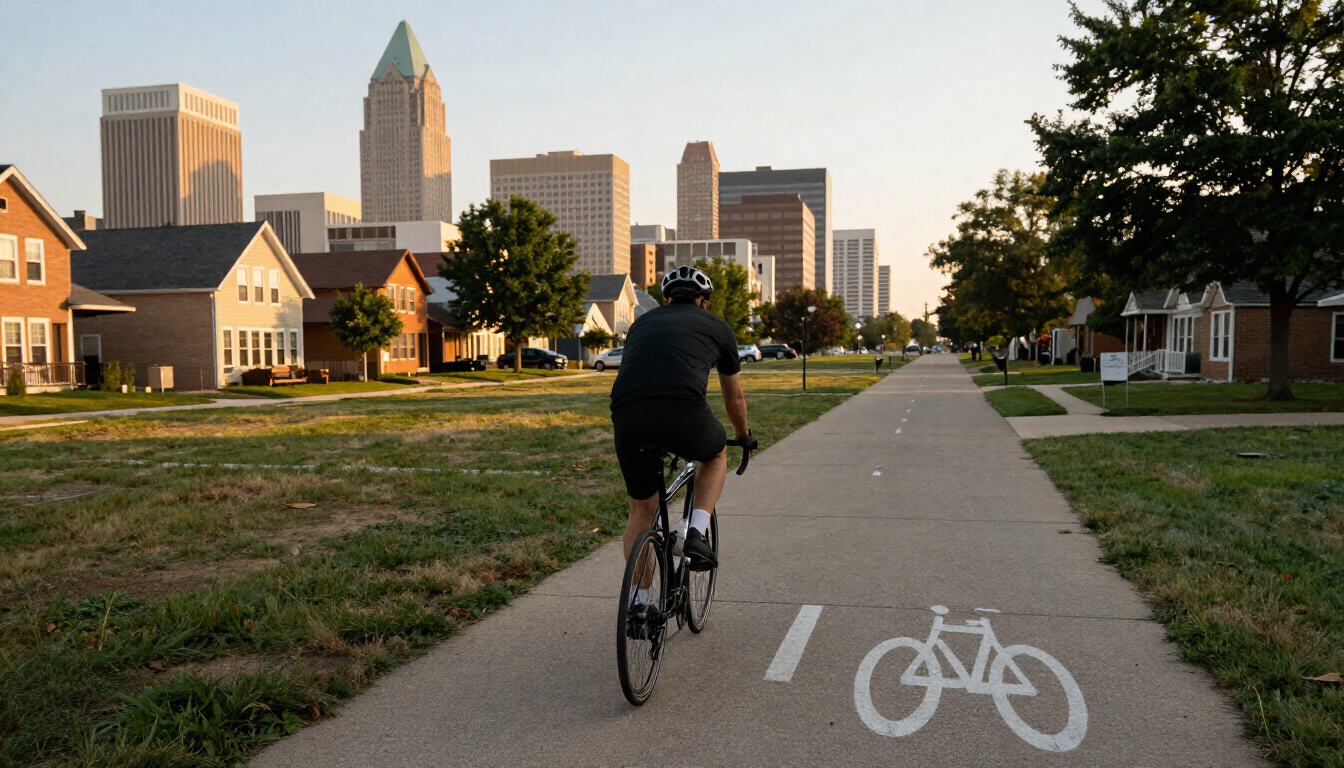
Road conditions — potholes, uneven pavement, debris and poor drainage — can contribute to a bicycle crash where a vehicle would be unaffected. Where a hazard came from (a vehicle, a property, a public roadway) can affect who may be responsible. Kansas City includes bike lanes, shared lanes and trails in various locations, and infrastructure continues to evolve; this page does not characterize specific infrastructure as safe or unsafe.
Visibility, lighting and lane position also affect how a crash is evaluated, especially after dark. No local bicycle-accident statistics are invented here; verified data should be obtained from official Missouri and Kansas City sources.
Frequently asked questions
General information only, not legal advice for any particular situation.
Keep exploring
Free case review
This is the intake experience a Kansas City injury firm would offer: clear fields, plain language and no pressure. On this demonstration site the form is entirely inert — nothing you type leaves your browser.
Demonstration only. No information is transmitted to an attorney or law firm.
Demonstration form only. Information entered here is not transmitted to a law firm or attorney.