I-70
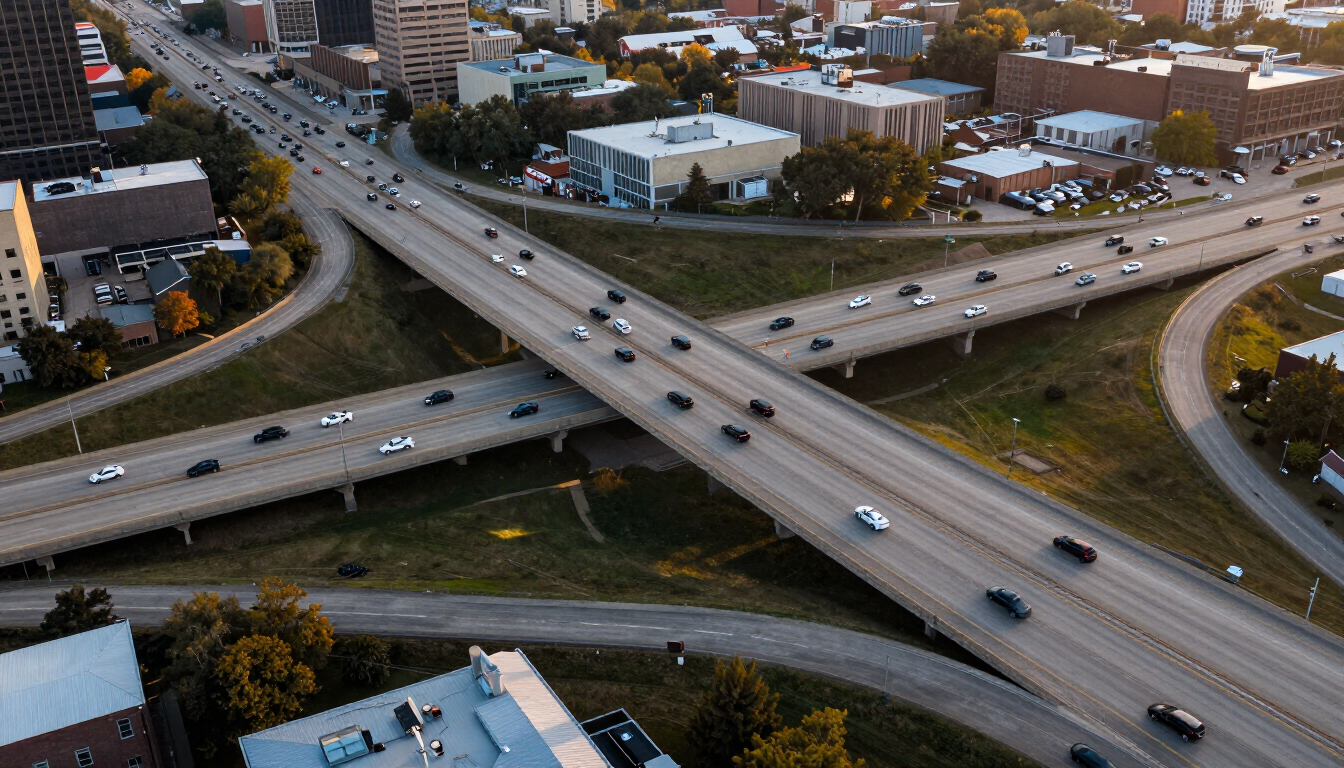
The major east-west freight corridor through Kansas City, linking cross-country traffic to distribution and industrial activity on both sides of the metro.
Local Resources · Commercial Trucking
Kansas City is a major interstate crossroads for regional and cross-country freight movement. Commercial trucking interacts with nearly every major route in the metro, and truck crashes can differ from ordinary car accidents in ways that shape both the investigation and the claim.
The short answer
Direct answer: Because Kansas City sits at the crossing of I-35 and I-70, ringed by the I-435 loop, with I-49 and US-71 serving the south metro — making it a major freight crossroads. Commercial trucks share these routes with passenger traffic, and when a serious collision occurs the forces, regulations, electronic records and multiple potentially responsible parties can make a truck case very different from a car claim.
Related resources
A freight crossroads
Kansas City’s location at the crossing of I-35 and I-70, ringed by the I-435 loop, makes it a natural hub for regional and cross-country freight movement. Distribution centers, industrial areas and freight activity cluster around the metro, and commercial trucks share the interstates with heavy commuter and passenger traffic.
This interaction — large commercial vehicles alongside passenger cars at highway speeds — is one reason serious truck collisions can raise questions that a passenger-car claim never touches.
Routes trucks use
Commercial trucks use all of the major Kansas City routes. These are the corridors that carry the heaviest freight interaction.
The major east-west freight corridor through Kansas City, linking cross-country traffic to distribution and industrial activity on both sides of the metro.
The north-south interstate carrying regional freight through downtown and toward the bridge crossings serving the Northland.
The perimeter loop that routes cross-town and bypass freight around the metro, intersecting every other major route.
The southern expressway and arterial corridor serving industrial and commercial activity in the south metro.
How truck cases differ
These are the factors that can make a commercial truck case different from an ordinary car accident. Not every truck accident involves violations or negligence.
A fully loaded tractor-trailer can weigh twenty or more times a passenger vehicle, producing far more destructive energy.
The motor carrier behind the driver brings corporate duties, safety departments and retained counsel into the matter early.
Hours-of-service, inspection and qualification rules create a regulatory framework passenger-car claims never touch.
Telematics, engine data and logging systems capture how the truck was operated in ways cars do not.
Driver, carrier, shipper, broker, loader and maintenance vendors may all bear on responsibility.
Commercial liability layers are larger and more complex to identify and coordinate.
Evidence & records
Much of the evidence in a truck case is held by the carrier. Engine and logging data is overwritten on short cycles, dash video is deleted on a schedule, and vehicles are repaired or returned to service. Written preservation notices and early identification help ensure that evidence is not lost before it can be reviewed.
This is general information. Not every truck accident involves regulatory violations, and no representation is made that Demo, Stration & Sample has active cases.
Frequently asked questions
General information only, not legal advice for any particular situation.
Keep exploring
Free case review
This is the intake experience a Kansas City injury firm would offer: clear fields, plain language and no pressure. On this demonstration site the form is entirely inert — nothing you type leaves your browser.
Demonstration only. No information is transmitted to an attorney or law firm.
Demonstration form only. Information entered here is not transmitted to a law firm or attorney.