Kansas City Police Department
Responds to crashes within Kansas City city limits and prepares accident reports for incidents in its jurisdiction.
Local Resources · Police & Crash Reports
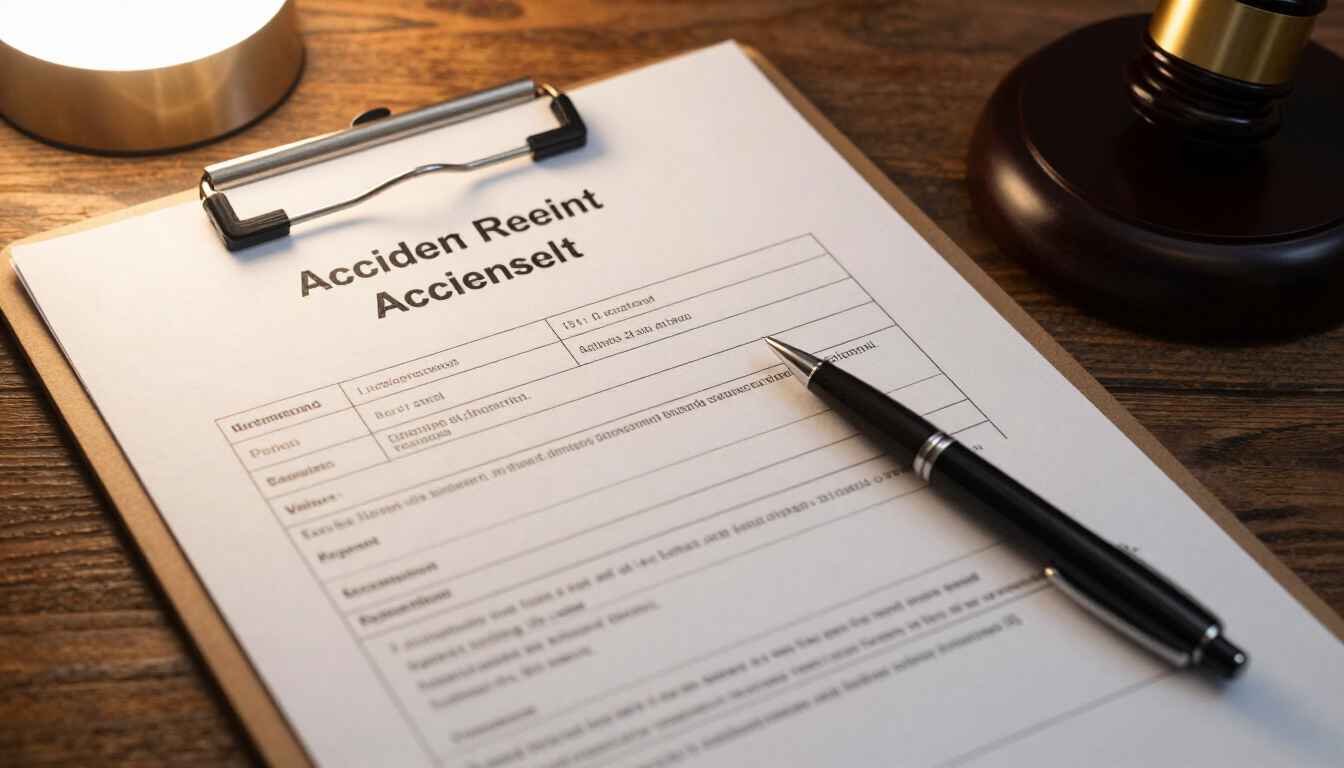
An official accident report is created by the law enforcement agency that responds to a crash. This page explains generally how crash reports may be obtained, which agency may hold them, and what a report typically contains — without inventing procedures, fees, phone numbers or links.
The short answer
Direct answer: Generally by requesting it from the law enforcement agency that responded to the accident. Which agency that is depends on where the crash occurred — the Kansas City Police Department, the Missouri State Highway Patrol, a county sheriff’s office or a municipal department. The report number and responding agency, noted at the scene, are what you need to request a copy. Specific fees, processing times and request methods vary by agency and should be confirmed directly with that agency.
Related resources
Which agency
Which law enforcement agency responds to — and reports on — a crash depends on where it occurred. A crash on an interstate is often handled by the Missouri State Highway Patrol, a crash within Kansas City city limits by the Kansas City Police Department, a crash in unincorporated county land by a county sheriff’s office, and a crash in a surrounding city by that city’s municipal department.
The responding agency is identified at the scene, and its name plus the report number are what you need to request a copy later. This page does not provide specific fees, phone numbers or links, because those details vary by agency and change over time — confirm current request information directly with the agency.
Responds to crashes within Kansas City city limits and prepares accident reports for incidents in its jurisdiction.
Often responds to crashes on interstates and state routes and maintains crash report systems for those incidents.
May respond to crashes in unincorporated county areas depending on the location.
Surrounding cities operate their own departments that respond to crashes within their boundaries.
What it contains
A crash report typically contains these elements. It is one piece of evidence, not a final ruling on fault.
Date, time, location and weather conditions of the accident.
Identifying details for the drivers, vehicles and owners involved.
A written account of what the officer found and concluded.
A sketch of the scene showing vehicle positions and movements.
Any traffic citations issued at the scene.
Names and contact details of witnesses who spoke with the officer.
How to obtain
To obtain a crash report, you generally request it from the responding agency — often for a fee and sometimes after a short processing period before the report is ready. Many agencies accept requests online, by mail or in person, but the specific process varies.
The key information you need is the report number and the responding agency, both of which should be noted at the scene. If you did not obtain them at the scene, the responding agency can often help identify the report based on the date, location and parties involved.
How it is used
Insurers and lawyers review the crash report early because it provides an official, contemporaneous account. It documents key facts, identifies witnesses and may note citations that bear on fault. A report that supports your account can strengthen a claim.
But the report is not binding. The officer’s opinion on fault is one perspective, formed at the scene and sometimes without the full picture. Fault is ultimately determined from all the evidence — the report, witness statements, vehicle data and any reconstruction. Errors in a report can be addressed with other evidence rather than accepted as final.
Frequently asked questions
General information only, not legal advice for any particular situation.
Keep exploring
Free case review
This is the intake experience a Kansas City injury firm would offer: clear fields, plain language and no pressure. On this demonstration site the form is entirely inert — nothing you type leaves your browser.
Demonstration only. No information is transmitted to an attorney or law firm.
Demonstration form only. Information entered here is not transmitted to a law firm or attorney.