01
Intersection collisions
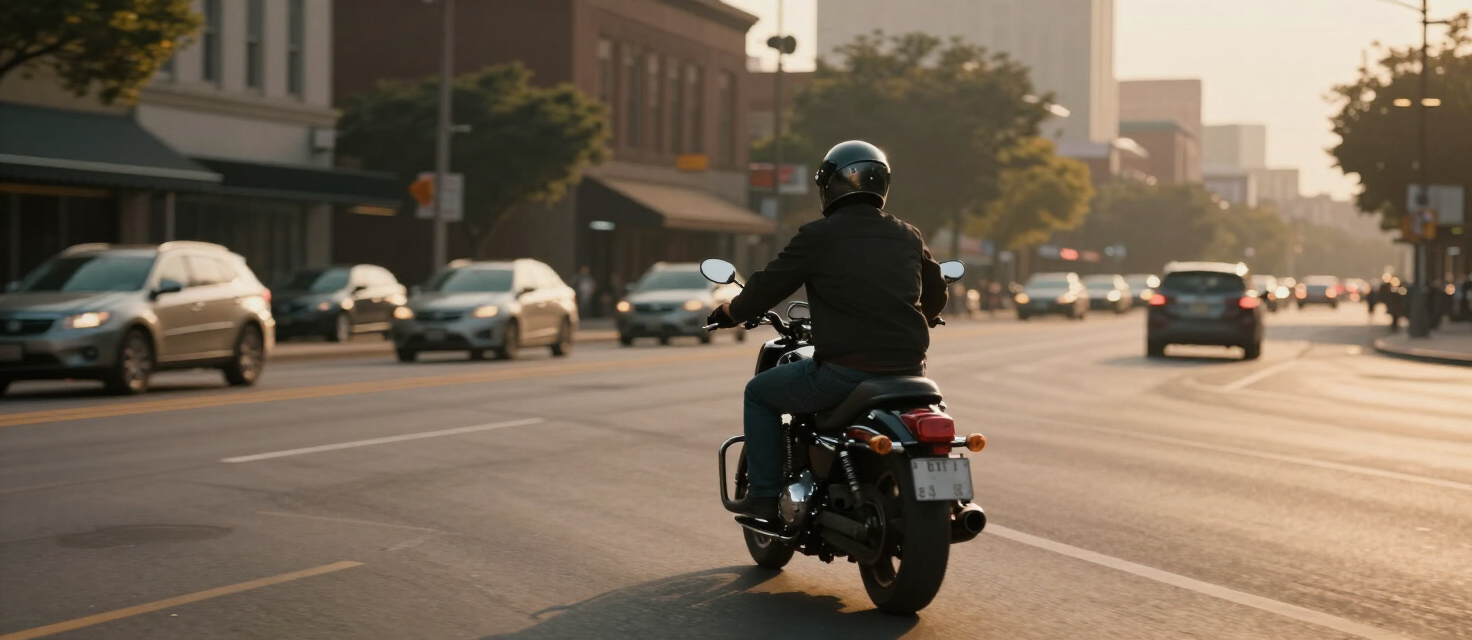
Most motorcycle crashes occur at intersections, where a crossing or turning vehicle enters the rider’s path. Right-of-way and sightline questions are usually central.
Practice Area · Vulnerable Road Users
A motorcyclist has the same right to the road as any other driver. But when something goes wrong, the rider absorbs the force directly. Serious injuries, disputed liability and rider bias can all shape how a motorcycle claim unfolds.
The short answer
Fault depends on the evidence — not on assumptions about motorcyclists. Most motorcycle crashes occur at intersections, frequently when another vehicle turns across or changes lanes into the rider’s path. Right-of-way, sightlines and what each driver could reasonably have seen usually decide the question.
Common crash scenarios
Most motorcycle crashes occur at intersections, where a crossing or turning vehicle enters the rider’s path. Right-of-way and sightline questions are usually central.
A common pattern: an oncoming vehicle turns left across the rider’s lane. Fault often turns on timing, signal use and what each driver could see.
A vehicle moves into a lane the rider already occupies. Visibility and mirror blind zones frequently become the contested issues.
A rider stopped in traffic is struck from behind. Even at low speeds the consequences can be serious without the protection of a vehicle frame.
Potholes, loose gravel, uneven pavement and debris that a car would barely notice can be hazardous to a rider. Where the hazard came from can matter.
Visibility & distraction
Drivers frequently report not seeing a motorcycle until impact. That statement is a fact to be examined, not a conclusion that ends the claim. Visibility, sightlines, conspicuity and driver attention all factor into how fault is apportioned.
Drivers frequently report not seeing the motorcycle until impact.
Other vehicles, signage and roadside objects can hide a rider.
Lighting, clothing and lane position affect how visible a rider is.
Motorcycles can be harder to judge for approaching and crossing speed.
Common injuries
These are categories of injury, not diagnoses or predictions. Prompt and consistent medical care matters for both health and documentation, because some serious injuries are not immediately apparent.
Concussive and severe brain trauma, with helmet use a relevant factual and legal question.
Neck and back trauma, including herniated discs and, in severe cases, paralysis.
Complex fractures and joint damage requiring surgical fixation and rehabilitation.
Severe skin and soft-tissue injury that may require reconstructive care.
Limb loss in high-force impacts, with prosthetic and vocational consequences.
Motorcycle crashes carry a higher risk of fatal outcome than passenger-vehicle collisions.
“A motorcyclist has the same right to the road. Liability turns on what each driver could see and did — not on the vehicle they chose.”
Evidence & medical treatment
Scene photographs, the police report, witness contacts, road-condition documentation and a consistent medical record are the building blocks. Because riders are often thrown clear, vehicle positions and scene geometry can be especially important — and they fade quickly.
Insurance & long-term consequences
Motorcycle injuries frequently involve long-term treatment, rehabilitation and reduced earning capacity. Recoverable damages depend on the facts and applicable law; potential categories may include medical expenses, future care, lost income, pain and suffering and permanent impairment. Nothing here promises recovery.
Frequently asked questions
General information only, not legal advice for any particular situation.
Keep exploring
Intersection, lane-change and rear-end collisions involving passenger vehicles.
Paralysis and spinal trauma with extensive care and accessibility needs.
Concussive and severe brain trauma proven through imaging and testing.
The stages a serious claim may move through, start to finish.
Free case review
This is the intake experience a Kansas City injury firm would offer: clear fields, plain language and no pressure. On this demonstration site the form is entirely inert — nothing you type leaves your browser.
Demonstration only. No information is transmitted to an attorney or law firm.
Demonstration form only. Information entered here is not transmitted to a law firm or attorney.