01
Crosswalk accidents
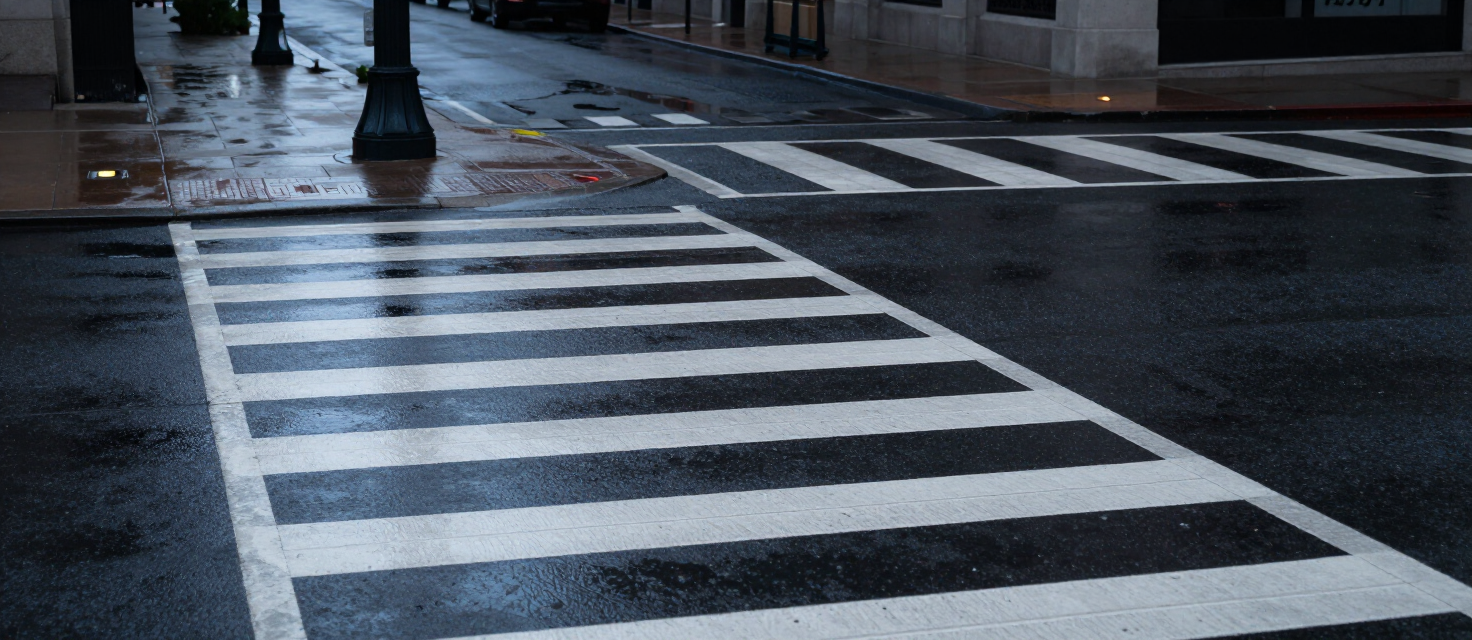
A pedestrian in a marked or unmarked crosswalk is struck by a vehicle that fails to yield. Right-of-way and signal timing are usually central.
Practice Area · Vulnerable Road Users
A person on foot has no protection against a vehicle. Pedestrian crashes frequently produce serious injuries, and the questions that follow — right-of-way, visibility, driver attention — shape both liability and the work of proving it.
The short answer
The pedestrian is usually the one seriously hurt. Drivers are generally required to yield to people in crosswalks, but the specific duties depend on Missouri law and the facts — signal phases, marked versus unmarked crossings, and the conduct of everyone involved. Medical care comes first; the evidence that supports a claim starts forming at the scene.
Common scenarios
A pedestrian in a marked or unmarked crosswalk is struck by a vehicle that fails to yield. Right-of-way and signal timing are usually central.
Turning vehicles conflict with people crossing with the signal. Left-turning vehicles are a frequent pattern.
Drivers focused on traffic often fail to scan for people crossing the street they are turning onto.
Low-speed lot environments where backing vehicles and distracted drivers strike people walking to and from their cars.
A driver leaves the scene after striking a pedestrian. Uninsured motorist coverage and prompt police involvement may both matter.
Kansas City context
Kansas City combines a walkable downtown with suburban roads designed primarily for vehicles. The settings below shape how pedestrian collisions occur here. No statistics are invented, and no location is characterized as dangerous without supporting data.
Kansas City’s downtown, Crossroads and River Market combine foot traffic, transit stops and turning vehicles at close range.
Reduced speeds, crossing guards and children’s unpredictable movement create a distinct risk environment.
Many pedestrian crashes happen after dark, when clothing, lighting and sightlines become decisive.
Phone use and in-vehicle distraction delay the reaction time a crossing pedestrian depends on.
“A person on foot has no crumple zone. The medical record and the scene evidence carry the claim.”
Common injuries
Important evidence
Insurance issues
The at-fault driver’s liability coverage is the first layer. When the driver is uninsured, underinsured or cannot be identified after a hit-and-run, the injured person’s own uninsured and underinsured motorist coverage may become relevant. Identifying every available layer is an early step.
Frequently asked questions
General information only, not legal advice for any particular situation.
Keep exploring
Claims brought by surviving family members under Missouri wrongful death statutes.
What happens when the at-fault driver cannot be identified or has no coverage.
Concussive and severe brain trauma proven through imaging and testing.
The stages a serious claim may move through, start to finish.
Free case review
This is the intake experience a Kansas City injury firm would offer: clear fields, plain language and no pressure. On this demonstration site the form is entirely inert — nothing you type leaves your browser.
Demonstration only. No information is transmitted to an attorney or law firm.
Demonstration form only. Information entered here is not transmitted to a law firm or attorney.