Rear underride
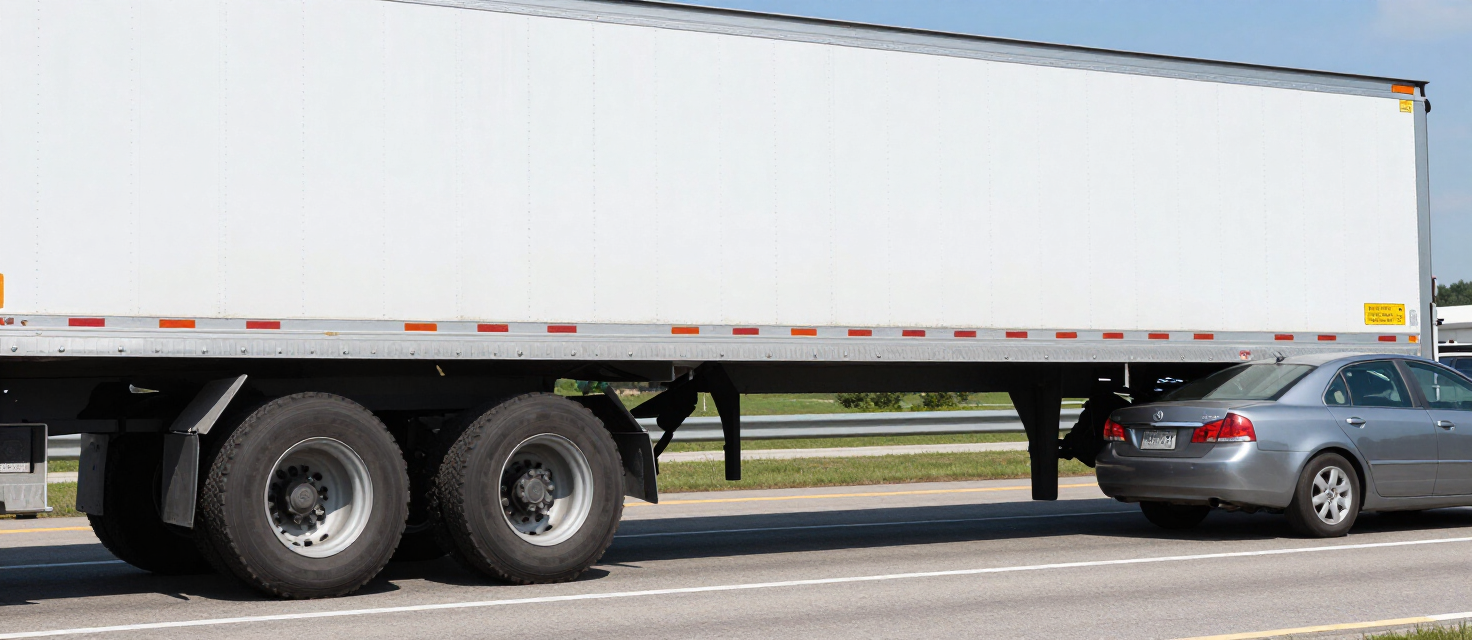
A smaller vehicle colliding with the back of a trailer can slide beneath it, bypassing the car’s crumple zone and safety systems.
Truck Accidents · Underride Collisions
An underride collision occurs when a smaller vehicle slides beneath a trailer, so the trailer strikes the vehicle at or above the windshield line. The protections a car relies on can be bypassed entirely.
The short answer
An underride collision occurs when a smaller vehicle slides beneath a tractor-trailer’s trailer, so the trailer structure strikes the vehicle at or above the windshield line. The protections a car relies on can be bypassed entirely, which is why these crashes are so often catastrophic or fatal. Guards, lighting and markings can matter. This page explains the issues in clear language; it is not legal advice about any particular crash.
How underride happens
These are the configurations and factors that produce underride, not conclusions about any specific crash.
A smaller vehicle colliding with the back of a trailer can slide beneath it, bypassing the car’s crumple zone and safety systems.
A vehicle striking the side of a trailer — at an intersection or during a turn — can pass beneath the trailer’s floor.
Trailers can be difficult to see at night or in poor conditions, especially when stopped across or perpendicular to a lane.
The height of a trailer’s floor relative to a passenger car’s hood and windshield is what makes underride possible.
Rear and side underride guards are designed to prevent or reduce underride; their presence, design and condition can matter.
Reflective tape, lights and markings help drivers see a trailer at night; missing or inadequate marking can be a factor.
Evidence
Relevant evidence depends on the facts. In an underride case, the height of the damage and the condition of guards and markings are often central.
Evidence That May Matter
The height and pattern of damage showing whether and how far the vehicle rode beneath the trailer.
The presence, design and condition of rear and side underride guards.
Reflective tape, lights and markings, and whether they were present and functional.
Scene, damage and any dashcam footage of the collision.
Officer findings, the position of the vehicles and lighting conditions.
Expert analysis of speed, sightlines and the underride dynamics.
Which evidence is relevant depends on the facts of the particular collision. This is general information, not legal advice or an investigation of any specific crash.
Kansas City context
Underride risk exists wherever passenger vehicles share the road with tractor-trailers — on Kansas City interstates like I-70 and I-435, and at intersections where a trailer turns across a lane. Nighttime and poor-visibility conditions increase the risk that a driver will not see a trailer in time. No roadway is characterized here as dangerous without supporting data.
Kansas City area resources
Potential injuries
Categories of injury, not diagnoses or predictions. Underride injuries are frequently catastrophic because the trailer reaches the passenger compartment.
Underride can bring the trailer floor into the passenger compartment at head height.
Severe brain trauma from impact at or above the windshield line.
Upper-spine injury from forces concentrated at the roof and windshield.
Underride crashes carry a heightened risk of fatal outcomes.
Impact with the trailer structure at occupant height.
Insurance issues
Guard design, condition and markings can raise questions beyond how the vehicles were driven.
Potential damages
Recoverable damages depend on the facts and applicable law. Nothing here promises that any particular damages will be recovered.
Emergency, surgical, ICU, imaging and therapy costs already incurred.
Ongoing and long-term care a provider anticipates will be required.
Wages and earnings lost during recovery.
Long-term impact on the ability to earn.
Repair or replacement of the vehicle.
The physical and emotional experience of the injury.
Lasting limitations on movement, cognition or function.
Additional categories recognized under applicable Missouri law.
What to do afterward
General guidance, not individualized legal advice. The damage height is critical evidence.
Underride crashes frequently involve catastrophic injury.
Photograph exactly where the trailer struck the vehicle — the height tells the underride story.
Capture guards, reflective tape, lights and markings.
Record time, weather and visibility at the scene.
Others may have seen the trailer’s position and lighting.
Underride injuries are often severe and need emergency evaluation.
Frequently asked questions
General information only, not legal advice for any particular situation.
Keep exploring
Free case review
This is the intake experience a Kansas City injury firm would offer: clear fields, plain language and no pressure. On this demonstration site the form is entirely inert — nothing you type leaves your browser.
Demonstration only. No information is transmitted to an attorney or law firm.
Demonstration form only. Information entered here is not transmitted to a law firm or attorney.